Best Yacht Stainless Steel Fittings for Boats and Yachts
Marine-grade stainless steel fittings are essential for reliable plumbing and handrail systems on boats and yachts. This guide highlights durable, corrosion-resistant options designed for saltwater environments, focusing on 316 stainless steel components that resist rust and wear. The selected products span thru-hull fittings, hand rail connectors, pipe adapters, and base fittings, offering versatile solutions for water intakes, bilge systems, rails, and deck hardware. Each entry links to an Amazon listing for quick procurement and provides essential features to help buyers compare durability, compatibility, and installation needs.
| Product | Brand | Key Use | Material |
|---|---|---|---|
| Boltigen Thru Hull Fittings | Boltigen | Thru-hull connections for 3/4″ hose | 316 Stainless Steel |
| 1PACK Marine 2-Way Cross Tube Connector | Generic | Hand rail and tube interconnections | 316 Stainless Steel |
| Prefdo 2PCS 316 Stainless Pipe Connectors | Prefdo | Two-way pipe and rail connections | 316 Stainless Steel |
| AICWIOO Handrail Straight Pipe Fitting | AICWIOO | Rail and dodger frame connections | 316 Stainless Steel |
| Keekeh 316 Stainless Combo Thru-Hull | Keehui | Thru-hull with gasket and nut | 316 Stainless Steel |
Boltigen Thru Hull Fittings for Boats

The Boltigen thru-hull barb fitting is designed for 3/4″ internal diameter hoses, providing a secure and leak-resistant connection critical for hull integrity. Constructed from 316 stainless steel, these fittings are engineered to resist corrosion and degradation in saline environments, ensuring long-term performance for water intake, bilge, or livewell applications. The straight barb design simplifies hose attachment and reduces the risk of leaks, while the material choice supports demanding marine use where exposure to saltwater and moisture is constant. When selecting this component, verify hose ID compatibility and ensure proper sealing to prevent water intrusion.
Key considerations include sizing accuracy, thread compatibility, and mounting orientation. A correct fit minimizes potential stress on hoses and fittings under wave action. Users should inspect the barb depth and check for any burrs that could impede a clean seal. Routine inspection for signs of corrosion or loosening is advisable in high-salt environments. This fitting is suitable for custom plumbing runs where a direct, straight connection is preferred, offering versatility across several marine systems.
1PACK Marine 2-Way Cross Tube Connector

This 2-way cross tube connector is designed for hand rails and deck fittings, with a 90-degree elbow variant that supports flexible installations on yachts. Made of marine-grade 316 stainless steel, it offers strong corrosion resistance and a smooth finish. The universal sizing (22/25/32mm) makes it a versatile choice for various tubing systems, from rails to frame connections. The bright mirror finish enhances aesthetics and helps resist fouling in marine environments. Manufacturing quality is reinforced by multi-step inspections and salt spray testing to ensure consistent performance under demanding conditions.
When choosing this connector, consider the tubing size you currently use and future expansion plans. The cross-type design reduces the number of separate fittings required for a railing system, simplifying installation. It is important to verify compatibility with existing hardware and ensure a proper gasket or seal is used if any joints are exposed to water spray. Regular maintenance helps prevent loosening due to vibration or impact while at sea.
Prefdo 2PCS 316 Stainless Pipe Connectors

Prefdo’s 2-piece straight pipe connectors are crafted from marine-grade 316 stainless steel with an integrated casting process. The design emphasizes corrosion resistance, a polished mirror finish, and a robust overall presence suitable for boat hand rails and other stainless steel tube connections. Each product undergoes multiple quality checks, including salt spray tests, to ensure reliability in marine environments. The connectors are described as durable and sturdy, designed to withstand the challenges of saltwater exposure and salt spray in coastal or open-water settings.
Consider掛ing for compatibility with your rail diameter and the exact pipe length you need. While the finish is attractive, the primary concern should be structural integrity under dynamic loads. Ensure you have appropriate gaskets or sealants where joints are exposed to spray or immersion. Routine inspection for wear at joints and threads will help extend service life in harsh marine climates.
AICWIOO Handrail Straight Pipe Fitting

AICWIOO offers a straight pipe fitting connector compatible with 1-inch tube systems, intended for deck handrails, bimini frames, and other rail-based structures on boats. The component uses marine-grade 316 stainless steel with silica sol precision casting for durability and superior resistance to seawater corrosion. A mirror-like surface finish not only enhances aesthetics but also reduces drag and makes cleaning easier. The connector is designed for easy assembly and robust joins, supporting up to two sections of tubing in many rail configurations.
When selecting this connector, evaluate the rail size, mounting style, and the load demands of your installation. The high-polish surface provides a professional look, but the primary focus should be on secure, tight joints and resistance to galvanic corrosion when different metals are used nearby. It’s beneficial to verify weld quality and any required mounting hardware to ensure a solid, long-lasting connection in rough sea conditions.
316 Stainless Steel Combo Thru-Hull Fitting
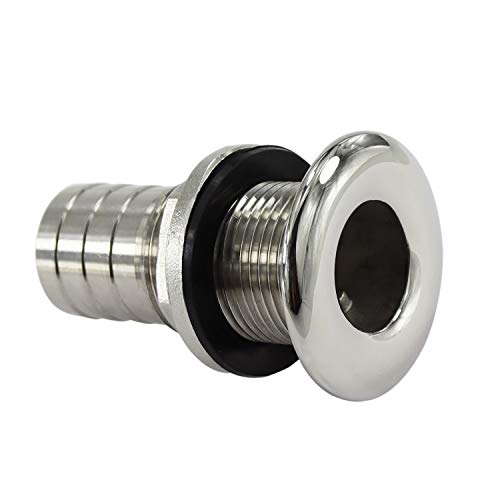
This combo thru-hull fitting includes a nut and gasket, delivering a ready-to-install solution for boats and yachts. The heavy-duty 316 stainless steel construction ensures durability against saltwater, with specified gasket compatibility for a reliable seal. The flange dimensions and thread lengths are important for ensuring a proper fit against the hull and compatibility with standard valves or connectors. The component is described as robust for marine plumbing, bilge work, or live well systems where a secure, leak-free connection is essential.
Buyers should confirm the exact through-hull diameter, thread standard (NPT or other), and gasket material to match their installation requirements. Regular inspection for corrosion, especially around the nut and gasket interface, is recommended. The product’s corrosion resistance and solid finish make it suitable for extended exposure to harsh marine conditions, though installation accuracy remains critical for optimal performance.
YANYUCB 316 Stainless Steel Thru Hull Fitting

YANYUCB’s thru-hull option emphasizes a robust 316 stainless steel body with custom gasket compatibility for boats and yachts. The product highlights 1 1/2″ NPT threading suited for American-standard fittings, noting a precise nut mating to threads and strong metal hardness. This through-hull fitting is positioned for reliable sealing and compatibility with standard valves, reducing potential leaks. The finish is intended to resist corrosion in saltwater and provide dependable long-term service in high-moisture environments.
Practical usage considerations include matching thread standards to existing hardware and ensuring the gasket material remains compatible with the liquids in your system. Routine checks for seam integrity and gasket condition help maintain a secure seal and extend service life, especially in high-vibration settings like spring and wave conditions.
316 Stainless Steel Combo Thru-Hull With Gasket
This entry emphasizes a complete thru-hull package featuring a nut and gasket, designed for secure installation and reliable sealing in marine environments. The 316 stainless steel body provides corrosion resistance, while the gasket and flange accommodate a robust and leak-free connection. The combination approach is convenient for installations where both structural and sealing components must be compatible with one another, reducing the number of separate parts needed on board.
When evaluating, consider the gasket material in relation to the liquid being carried and the hull material. Ensure that the nut tightens evenly to avoid warping the hull or distorting the gasket seat. Regular inspections should focus on corrosion around the threads, gasket compression, and any signs of leakage, particularly after exposure to spray, rain, or spray from waves.
Buying Guide: Key Considerations for Yacht Stainless Steel Fittings
- Material and corrosion resistance: Prioritize 316 stainless steel for coastal and offshore use due to excellent corrosion resistance in saltwater environments.
- Sizing and compatibility: Confirm hose ID, thread standards (NPT or metric), and tube diameters to ensure proper fit and secure seals. Mismatched sizes lead to leaks or failure under pressure.
- Sealing and gaskets: Choose fittings with compatible gaskets and seals; inspect regularly for wear, degradation, or salt buildup that can compromise seals.
- Through-hull vs. deck fittings: Through-hull components require careful hull penetration and sealing; deck or rail fittings demand robust mounting, corrosion resistance, and load-handling capability.
- Finish quality and maintenance: A mirror-polish finish not only looks good but also helps resist fouling. Clean regularly and check for micro-scratches where corrosion can initiate.
- Installation considerations: Some fittings are designed for easy insertion and removal, while others require professional installation, especially where hull integrity and seawater exposure are concerns.
- System compatibility: Consider how fittings integrate with existing bilge pumps, water intakes, livewells, rails, or dodger frames. Avoid mixed metals in proximity to minimize galvanic corrosion.
- Testing and inspection: After installation, pressure-test lines, inspect for leaks at joints and threads, and verify that hose clamps are secure to prevent detachment during movement.
- Maintenance plan: Schedule periodic inspections, particularly after heavy seas or long-term exposure to salt spray. Replace worn gaskets, check for corrosion, and re-tighten fittings as needed.
- Cost versus durability: While premium 316 stainless steel fittings may be priced higher, their longevity and resistance to marine conditions often justify the investment for safety and reliability.