Best Water Level Controller Manufacturers: Top 5 Picks for Reliable Water Management
Choosing the right water level controller can reduce pump wear, prevent spills, and automate water management across homes, farms, and industrial settings. The following selections focus on reliable sensors, versatile modes, and easy installation. Each entry highlights core features to help buyers compare options at a glance.
| Product | Brand | Key Features |
|---|---|---|
| Stropum Automatic Water Level Controller | Stropum | 4 modes; automatic water level management; reliable detector sensors |
| Shengbowi Automatic Water Level Controller | shengbowi | Automatic pump control; built-in sensor; wide voltage compatibility |
| Water Level Sensor Control Relay GRL8-01 | IGEYAPA | AC/DC 24-240V; LED indicators; DIN-rail mounting; 10A |
| GONLEN Tuya Smart Water Level Controller | GONLEN | WiFi app monitoring; multi-level display; two relays for pump and anti-dry |
| TTAMG Level Controller Module | TTAMG | 12V; compatible with various sensors; automatic/manual modes |
Stropum Automatic Water Level Controller

The Stropum controller provides four modes plus manual and auto switching to suit different water-management needs. It supports water supply, drain, lack-water stopping, and joint mode, making it adaptable for tanks, wells, or garden irrigation systems. Automatic water level management helps prevent overflow and dry running, a key feature for remote operation or busy households. The detector sensors are designed for reliability, enabling stable long-term performance in varying temperatures and water conditions. Installers should verify compatibility with the pump and power source to ensure seamless operation.
Shengbowi Automatic Water Level Controller

Shengbowi offers automatic level control that starts or stops pumps based on detected water levels, reducing the need for manual monitoring in tanks, deep wells, and pits. It includes a built-in liquid level sensor for accurate detection and supports multiple modes, including supply and drain. The device configures for 110V/220V AC or low-voltage DC systems, broadening compatibility with common pumps and valves. This makes it a flexible choice for agricultural setups, homes, or remote installations where power availability varies.
Water Level Sensor Control Relay GRL8-01
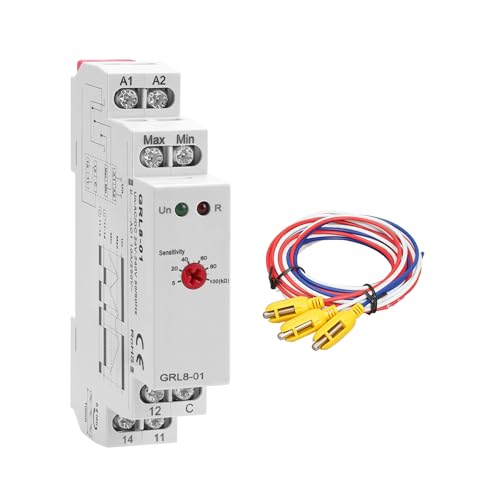
IGEYAPA’s GRL8-01 is a compact DIN-rail mounted relay designed for automatic water level control with a 24-240V AC/DC range and 10A rating. The 5-foot detector sensor enables accurate level detection across tanks, reservoirs, or ponds. LED indicators show input power and pump activity, providing quick status checks during maintenance. Its streamlined size, robust construction, and straightforward wiring make it suitable for control panels or industrial housings where space is at a premium.
GONLEN Tuya Smart Water Level Controller

GONLEN’s Tuya-enabled model delivers WiFi-based monitoring and control via a mobile app. It supports real-time water level display with five preset levels (0%, 25%, 50%, 75%, 100%) and dual relay outputs to operate a water pump and an anti-dry heating function. This setup is well-suited for residential wells, small commercial applications, or remotely monitored irrigation systems. The integration with a smart home ecosystem enables push alerts and remote adjustments, enhancing proactive water management.
TTAMG Level Controller Module

The TTAMG module is a versatile 12V DC/AC controller designed to work with a variety of liquid level sensors. It supports automatic and manual control, making it adaptable for fish tanks, home water towers, or irrigation systems. Its simple mounting on standard rails and broad compatibility with sensors provides a practical option for hobbyists and professionals seeking straightforward integration with existing electrical setups. The device emphasizes reliable switching and robust control for everyday water management tasks.
Buying Guide
Key considerations when selecting a water level controller include:
- Voltage compatibility: Ensure the unit supports your power supply (AC 110/220V or DC options) and matches pump or valve requirements.
- Control modes: Look for automatic, manual, or hybrid modes to fit different use cases and maintenance routines.
- Sensor quality and range: Detectors determine accuracy; longer detector cables help in larger tanks but ensure they’re rated for water exposure.
- Relay specifications: Check current rating (amperage) and contact type to support pumps, valves, or solenoids without overheating.
- Mounting and installation: DIN-rail or wall-mount options facilitate clean panel integration; consider enclosure protection in wet environments.
- Connectivity: For smart or remote control, consider WiFi or app-enabled devices; verify compatibility with your ecosystem.
- Diagnostics and indicators: LEDs or app notifications aid troubleshooting and maintenance planning.
- Environmental suitability: For outdoor deployments, ensure weather resistance and sensor protection.
When comparing products, balance the number of features with reliability and ease of installation. For simple homes, a plug-in unit with clear LED indicators may suffice. For farms or industrial settings, a DIN-rail mounted solution with higher current capacity and robust sensors may be preferable. Consider future needs such as remote monitoring or integration with existing automation systems to choose a scalable option.