Best Vertical Mount Hydraulic Pump Solutions for Powering Lifts and Log Splitters
Choosing a vertical mount hydraulic pump involves balancing flow, pressure, speed, and mounting compatibility. The following five products are geared toward American workshop needs, including log splitting, hoisting, and versatile power units. Each option supports vertical or SAE-style mounting and offers robust construction for demanding tasks.
Product Comparison Summary
| Product | Brand | Flow / Stage | Max Pressure | Mount Type | |
|---|---|---|---|---|---|
| Flynsu 28 GPM Two Stage | Flynsu | 28 GPM / 2 Stage | 4000 psi intermittent, 3000 psi continuous | SAE Mount | Durable cast iron, hardened gears |
| Holdia 2 Stage 28 GPM | Holdia | 28 GPM / 2 Stage | 4000 psi intermittent, 3000 psi continuous | Mounting: 100% adaptable; 1″ NPT | Requires sufficient horsepower |
| VEVOR Long Ram Kit | VEVOR | Variable (long ram) | Not specified here | Mountable components | 3 tons capacity, durable cylinder |
| AGKNX Log Splitter Build Kit | AGKNX | 16 GPM | Not specified | Mounting kit | Includes mount and valve |
| Prefer Warehouse 28 GPM Two Stage | Prefer Warehouse | 28 GPM / 2 Stage | 3000 psi continuous | Cast iron body | Durable gears, multiple applications |
Flynsu 28 GPM Two Stage Hydraulic Pump

The Flynsu unit is a two-stage hydraulic pump designed for high-demand wood processing and similar tasks. In the first stage, it delivers 28 GPM, then steps down to 7.6 GPM in the second stage to balance speed and pressure. With a maximum intermittent pressure of 4000 psi and a continuous rating around 3000 psi, this model supports heavy loads while keeping heat in check during longer operations. A 5/8″ shaft and 3/16″ keyway are paired with a 1″ NPT inlet and 3/4″ outlet. The SAE mount and cast iron body provide rigidity for vertical mounting and rugged environments. Needle bearing construction helps reduce wear for longer life in demanding settings.
Users should consider horsepower requirements and drive alignment when integrating this pump into a vertical setup. The two-stage design is particularly suitable for log splitters or multi-function hydraulic rigs where a quick, high-flow initial stroke is needed, followed by controlled, high-pressure finishing strokes. The Flynsu pump’s durable gearing and simple porting support easier maintenance in field installations. For safety and reliability, ensure a clean, consistent fluid supply and proper oil viscosity for the climate and load profile.
Holdia 2 Stage Hydraulic Log Wood Splitter Pump

The Holdia pump mirrors the Flynsu design, offering two stages with 28 GPM in the first stage and 7.6 GPM in the second. It provides a robust 4000 psi intermittent and 3000 psi continuous rating, driven by a 4000 RPM capability. With a 5/8″ shaft and 3/16″ keyway, the unit uses 1″ NPT inlet and 3/4″ NPT outlet connections and is adaptable to vertical or horizontal mounting. A note warns that substantial horsepower is needed for efficient operation, and the unit requires a 100% reliable fluid supply to prevent damage. This placement makes Holdia well suited to power-saturated log splitters or other heavy lifting setups that benefit from strong initial flow and steady pressure.
For installations where rotation direction matters, verify engine orientation relative to the pump’s shaft. The dual-stage arrangement helps achieve faster rams while maintaining control during peak loads. The Holdia unit’s durability and mounting versatility make it a practical drop-in option for vertical mounts in farm, workshop, or truck-mounted configurations.
VEVOR Hydraulic Long Ram Jack Kit

VEVOR offers a hydraulic long ram jack system designed for crane and hoist applications, with a manual cherry picker style setup and a clevis base. While marketed as a jack, the long ram and hydraulic actuation support vertical mounting and heavy lifting in shop or garage environments. The unit handles up to 3 tons (6600 lbs), with a lifting range from approximately 26 inches to 45.7 inches and a 19.7-inch stroke. The design emphasizes a slow release function for safety and control, while the hydraulic cylinder features a treated piston-ram and high-grade polyurethane seals to resist wear and oil drift. This makes it suitable for vertical lift scenarios where precise load management matters.
When integrating with a vertical mount hydraulic pump system, ensure compatible flow and pressure outputs, as well as secure mechanical mounting to prevent binding or misalignment. The product’s emphasis on stability and precision supports applications ranging from engine hoists to shop cranes, especially where gradual, controlled lowering is critical for safety and accuracy.
AGKNX Log Splitter Build Kit

The AGKNX kit provides a 16 GPM pump suitable for 3600 RPM operation, with a shaft of 1/2″ and porting including 1″ inlet and 1/2″ outlet NPT connections. The assembly length is 7-1/4″ with the shaft at 5-5/8″ long without the shaft, indicating a compact, modular approach to building a vertical-mount hydraulic system. This kit, including mount hardware and a coupler, is intended for wood splitters and other hydraulic processes where a compact, reliable pump is the core component. It emphasizes ease of installation and upgrade potential for existing rigs that need an efficient two-pump arrangement or staged operation.
As with any vertical-mount configuration, proper alignment and securing of all fasteners are crucial. Assess the machine’s power source and hydraulic reservoir capacity to ensure consistent flow and prevent cavitation. The AGKNX kit is a practical option for builders looking to customize or retrofit log splitters or small presses with a compact, well-supported pump unit.
Prefer Warehouse 28 GPM Two Stage Pump
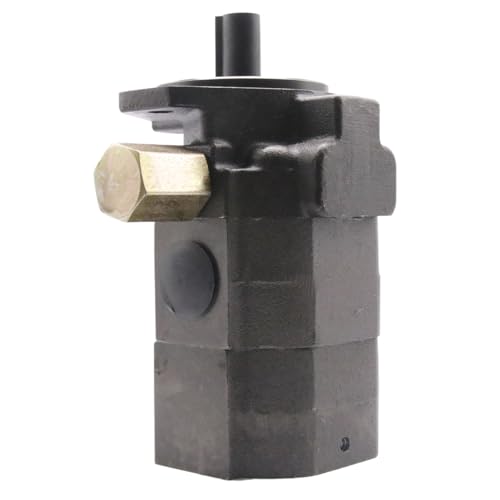
The Prefer Warehouse unit delivers 28 GPM in a two-stage configuration and is rated for up to 3000 psi continuous service. The pump is housed in a cast iron body with durable gears designed to resist rust and high pressure, which contributes to a longer service life in demanding environments, such as log splitters, presses, clamps, and compactors. Its robust construction supports various industrial applications, making it a flexible choice for vertical-mount setups that require reliable performance across cycles.
When integrating this pump, consider the machine’s drive system, reservoir, and filtration. Proper mounting and alignment reduce wear on shaft seals and gears. Establish a maintenance plan to monitor oil quality and perform periodic checks on inlet lines and fittings to maintain peak efficiency and prevent contamination from impacting hydraulic performance.
Buying Guide: Key Purchase Considerations
- Flow and stage configuration: Choose single-stage or multi-stage pumps based on duty cycle. Two-stage systems excel at rapid initial movement with sustained high pressure for finishing strokes.
- Pressure rating: Match continuous and intermittent PSI to the load. Higher PSI allows heavier lifting and faster stroke response but may demand better cooling and filtration.
- Mounting compatibility: Verify vertical or SAE mounting compatibility, shaft size, and keyway. Ensure correct inlet/outlet port sizes (NPT) and that mounting brackets align with your frame.
- Power source and drive: Confirm engine or motor compatibility, rotation direction, and horsepower requirements. Some models require counter-rotating shafts or specific drive arrangements.
- Material and build quality: Cast iron housings and hardened gears contribute to durability under heavy use. Look for needle-bearing or low-friction bearing designs for longevity.
- Maintenance and serviceability: Favor units with accessible ports, clear labeling, and robust seals. Plan for fluid type, viscosity, and reservoir capacity to prevent cavitation and overheating.
- Application fit: Assess intended use—log splitting, lifting, clamping, or power units—and ensure the pump supports the load profile, stroke length, and cycle rate required by the task.
- Warranty and support: A solid warranty and responsive customer service help when selecting components for critical work.
In selecting a vertical-mount hydraulic pump, prioritize reliability, mounting flexibility, and compatibility with your rig’s hydraulic system. Consider a modular approach if future upgrades or expansion are likely, and document all specifications for safe operation and maintenance.