Best Stirred Reactors and Pressure Vessels for Lab Research
When selecting stirred reactors and high-pressure vessels for laboratory work, reliability, material compatibility, and precise control are critical. This guide highlights five top options, spanning glass jacketed reactors to robust stainless steel autoclaves. Each entry includes core specs, typical applications, and practical considerations to help researchers and technicians choose a system that matches their demands for reaction control, handling of corrosive media, and safety.
| Product | Brand |
|---|---|
| EQCOTWEA 5L Double-Layer Jacketed Glass Reactor | EQCOTWEA |
| HNZXIB 500ml High-Pressure Reactor Autoclave | HNZXIB |
| LABFENG Autoclave Reactor MAX 350C, 22MPa | LABFENG |
| HNZXIB 100ml Desktop Mechanical Stirring Reactor Autoclave | HNZXIB |
| HNZXIB 250ml High-Pressure Autoclave With PTFE Lining | HNZXIB |
The following sections showcase five products with practical features such as temperature and speed control, high-pressure capability, and robust construction. Each entry includes a concise overview of key specifications to support a well-informed purchasing decision.
EQCOTWEA 5L Glass Jacketed Reactor

- Parameters: 5L reaction kettle with 0.8L jacket volume; vacuum up to 0.098 MPa; stepless speed 0-600 RPM; 90W motor; torque up to 200 N.cm.
- Digital display for temperature and speed; intuitive interface for precise control.
- Construction: GG17 borosilicate glass, 304 stainless steel frame, PTFE stirring rod; compact, durable design.
HNZXIB 500ml High-Pressure Reactor Autoclave
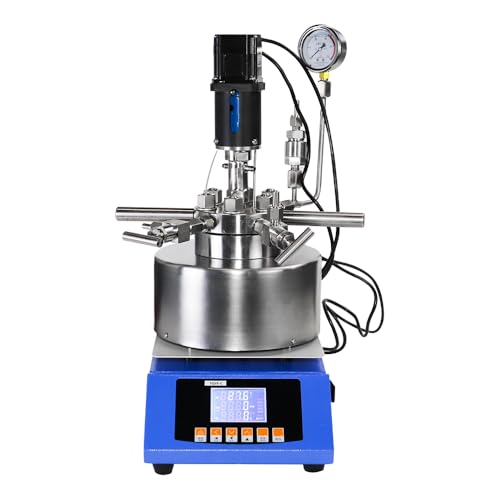
- Material: 304L Stainless Steel; max pressure up to 22 MPa; 110V/60Hz operation.
- LCD display for stirring speed and temperature; parameter buttons for precise adjustments.
- Includes: mini DC motor, pressure gauge, explosion-proof valve, intake and sampling valves, and temperature probe for micro-reaction tests.
LABFENG Autoclave Reactor MAX 350°C, 22MPa

- Maximum pressure: 22 MPa; maximum temperature: 350°C; heating rate up to 5°C/min.
- Sturdy sealing with fixed ring base; no O-ring required; simple stainless steel body (304 SS standard, 316 SS customizable).
- High-pressure sealing and customizable gauge ranges to fit specific needs.
LABFENG Autoclave Reactor MAX 350°C, 22MPa (Second Variant)

- Similar specs: 350°C, 22 MPa; 304 stainless steel; fixed ring seal design; no O-ring.
- Option for customization in capacity and stainless steel grade to match lab requirements.
- High-pressure sealing with adjustable gauge ranges and robust construction for reliable testing.
LABFENG Autoclave Reactor MAX 350°C, 22MPa (Third Variant)
- Same high-pressure capabilities with a sealed stainless steel vessel and customizable gauge options.
- Designed to form a perfect seal via fixed ring assembly; suitable for demanding digestion and synthesis tasks.
- Flexible configurations to accommodate different lab workflows and capacity needs.
HNZXIB 500ml High-Pressure Autoclave With LCD
- 22 MPa maximum pressure; 0-350°C temperature range; LCD monitoring of temperature and speed.
- Zero-leakage mechanical stirring; UL-tested motor; maximum 1800 rpm with adjustable speed.
- Real-time parameter control supports repeatable experiments and safer operations.
HNZXIB 250ml Autoclave With PTFE Lining
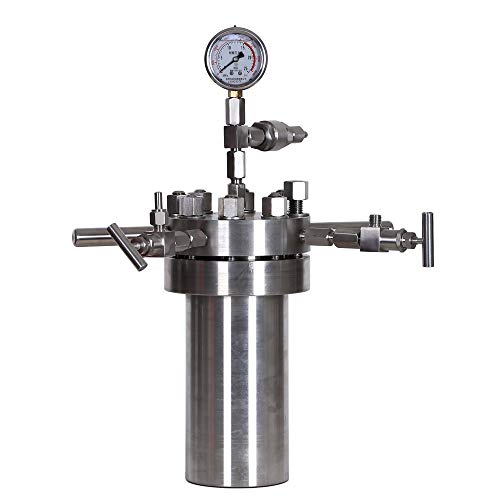
- 304L stainless steel vessel with PTFE lining; temperature tolerance < 220°C; maximum pressure 22 MPa.
- Suitability for corrosive media and high-temperature reactions; robust corrosion resistance.
- Compact footprint with dependable high-pressure performance for controlled lab experiments.
Buying Guide
Key factors to consider when choosing stirred reactors and high-pressure vessels:
- Pressure and temperature ratings: Match maximum ratings to the intended chemical processes; higher pressure vessels support more aggressive synthesis and digestion tasks, but require stricter safety checks and maintenance.
- Material compatibility: Glass and borosilicate vessels provide chemical inertness in some reactions, but stainless steel offers durability and broader media compatibility; PTFE linings add resistance for aggressive liquids.
- Sealing and safety: O-ring-free designs reduce leakage risk; fixed-ring seals can enhance sealing integrity, but require proper assembly and inspection.
- Control interface: LCD displays, programmable speed, and temperature control improve repeatability; intuitive controls save time in busy lab environments.
- Capability vs. footprint: Larger high-pressure reactors deliver higher capacity but demand more space and safety infrastructure; consider lab layout and ventilation when selecting.
- Maintenance and availability: Access to replacement parts, gaskets, and stirrer components influences total cost of ownership; vendor support matters for long-term operation.
- Customization options: Some models offer capacity and material customization; assess whether a standard unit can meet future project needs or if customization is essential.
For researchers prioritizing safety and precise reaction control, a combination of glass jacketed systems for delicate processes and stainless steel autoclaves for high-pressure tasks provides a balanced approach. Each product line offers distinct advantages in materials, sealing, and instrument control, enabling laboratories to tailor equipment to experimental requirements and safety standards.