Best Stainless Steel Submersible Sewage Pumps for Basements and Basins
When selecting a stainless steel submersible sewage pump, durability, flow rate, and automatic control are key factors. This guide reviews five capable models designed for basements, sump basins, and effluent tasks, highlighting corrosion resistance, performance, and installation versatility. Each product below includes practical features, ideal use scenarios, and what to consider before buying.
| Product | Brand | Approx. Flow (GPH) | Discharge |
|---|---|---|---|
| LANCHEZ 1/2 HP 5200 GPH | LANCHEZ | 5200 | 1-1/2″ NPT |
| FOTING Full 304 Stainless Steel | FOTING | 4600 | 1″ (as per unit specs) |
| AQUASTRONG 1HP Grinder | AQUASTRONG | 3962 | 2″ NPT |
| VEVOR 1 HP Submersible | VEVOR | 5500 | 30 ft max lift |
| WAYNE 3/4 HP Submersible | Wayne | 5490 | Top suction design |
LANCHEZ 1/2 HP Submersible Sump Pump
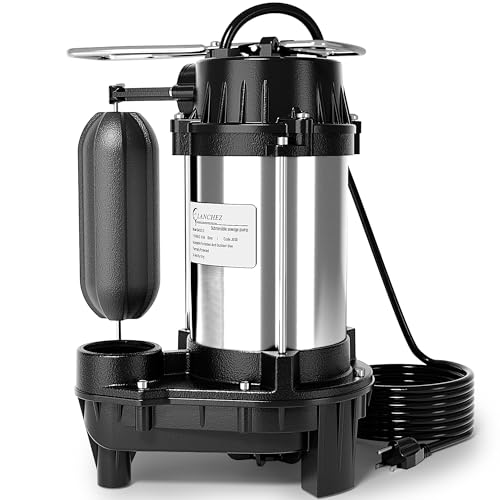
The LANCHEZ unit combines a cast iron and stainless steel housing for corrosion resistance and durability in sump pits. It features a built-in vertical float switch that turns on at about 10.24 inches and off at 4.33 inches. With a 1/2 HP PSC motor, it can move up to 5200 GPH and lift water up to 26 feet, suitable for basements and effluent tasks. Built-in thermal overload protection helps prevent motor burnout during dry running. The 1-1/2″ NPT discharge supports standard piping connections.
FOTING 304 Stainless Steel Sump Pump

FOTING offers a full 304 stainless steel body with a 1HP motor delivering up to 4600 GPH and a vertical lift up to 32 feet. The unit includes an automatic float switch that activates around 7 inches, and shuts off near 1.5 inches, with a manual mode option for continuous operation when needed. The rugged construction and 1-1/2″ piping compatibility provide flexibility for basement drainage, pools, and other water removal tasks requiring efficient performance and reliability.
AQUASTRONG 1HP Grinder Sump Pump

This stainless steel grinder pump is designed to shred solids before pumping, reducing clogs and blockages in sewer lines. It incorporates a heavy-duty stainless steel motor housing and a cast iron base with an anti-clog impeller. The unit offers a 1HP copper-wired motor, up to 3962 GPH flow, and 46 feet of head, with an auto float feature to control on/off. The design aims at basement sewage or wastewater scenarios where solids could be present, and it includes an exhaust valve for smooth operation.
VEVOR 1 HP Submersible Sump Pump

VEVOR’s 1 HP pump delivers up to 5500 GPH with a max head of 30 feet. Its stainless steel construction provides superior corrosion resistance, paired with IPX8 sealing for reliable submersion. The pump is designed to handle dirty water with debris thanks to a raised base plate and discharge that allows solids to pass. An automatic float switch supports hands-off operation, making it suitable for flooded basements, pools, and other wastewater removal tasks.
WAYNE 3/4 HP Submersible Sump Pump

Wayne’s CDU980E combines a stainless steel motor housing with a cast-iron volute for durability. It features a top suction design to minimize air lock and reduce debris-related clogging. The unit is intended for indoor use, with a practical 5,490 GPH capacity to keep basements dry during heavy rainfall or snowmelt. Its installation is straightforward and designed for quick setup without requiring a weep hole.
Buying Guide: Key Considerations For Stainless Steel Submersible Sewage Pumps
- Flow rate and head: Match the pump’s GPH and maximum lift to your drainage needs. Higher GPH is beneficial for large basements, while greater head is essential for higher discharge points.
- Material and durability: Stainless steel housings resist corrosion and wear in dirty or chemically challenging environments. Cast iron components can add stiffness but may require more maintenance in certain settings.
- Discharge size and adapters: Check the discharge dimensions (NPT fittings) and included adapters to ensure compatibility with existing piping and hoses.
- Automatic control: Look for an automatic float switch that starts and stops based on water level, with a manual override option for scenarios needing continuous operation.
- Solid handling: If you expect solids, consider grinders or impellers designed to handle debris and reduce blockages.
- Maintenance access: Easy access to impellers, seals, and switches reduces downtime and extends service life.
- Electrical safety: Verify IP ratings and insulation suitable for submerged operation, and ensure wiring meets local electrical codes.
- Installation context: Indoor basements vs outdoor pits; consider pump height, chamber size, and the need for check valves or backflow prevention.
- Noise and vibration: Mounting options and motor design influence noise; quieter models are preferable for living spaces or finished basements.
- Warranty and service support: A robust warranty and accessible service centers help protect your investment over time.
Each model above emphasizes stainless steel reliability, practical automatic controls, and adequate flow for typical basement or sump tasks. When choosing, align features with your specific site conditions, such as soil drainage, water table levels, and debris presence. This approach helps ensure long-term performance and minimizes maintenance needs.