Best Rod Ends Spherical Bearings for Precision Linkage Applications
Spherical rod ends, or rod end bearings, provide pivotal joints that handle misalignment in mechanical linkages. This article highlights top-rated spherical bearing options suitable for automotive, robotics, and industrial assemblies. Each product balances strength, misalignment tolerance, and durability. A quick reference table follows to compare key specs at a glance.
| Product | Bore / Thread | Material / Finish | Key Benefit |
|---|---|---|---|
| FK Rod Ends COM-T Series | 0.750 in ID | Low-carbon steel, PTFE lined | Smooth self-lubricating action for moderate loads |
| uxcell POSB6 Male Rod End | 3/8 in bore, 3/8-24 RH | #45 steel, zinc/chromium coatings | Good angular misalignment tolerance |
| Befenybay PHSB6 Rod End Bearings | 3/8 in bore, 3/8-24 RH | #45 steel, hardened bearing steel | High static and dynamic load capacity |
| uxcell PHSB5 Female Rod End | 5/16 in bore, 5/16-24 RH | #45 steel, chromium/zinc coatings | Balanced strength and corrosion resistance |
| FOCMKEAS POSB4 Spherical Rod End | 1/4 in bore, 1/4-28 RH | #45 steel, hardened bearing steel | Compact option with solid forging and self-lubrication |
FK Rod Ends Spherical Bearing, COM-T Series
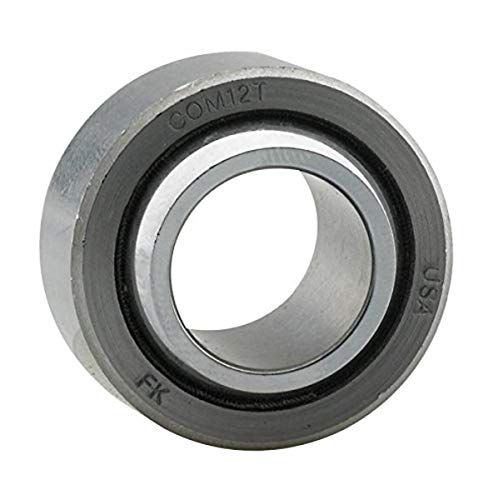
The COM-T series from FK Bearings offers a 0.750 inch inner diameter with a PTFE-lined interface for smoother motion under moderate loads. The product uses low-carbon steel with an oil-coated race for durability, complemented by a compact package size. This rod end is suitable for assemblies requiring reliable self-lubrication and a robust steel-to-steel bearing interface. It includes standard packaging dimensions to help estimate fit within existing linkages.
uxcell POSB6 Male Rod End

This 3/8 inch bore rod end has a 3/8-24 right-hand thread, designed for smooth and flexible motion in mechanical assemblies. The inner spherical surface features chromium plating, while the rod end body sports zinc plating for corrosion and wear protection. It supports a maximum angular misalignment around 9 degrees, offering reliable performance in compact linkages where space is at a premium.
Befenybay PHSB6 Rod End Bearings

These 3/8-inch bore rod ends feature 3/8-24 right-hand female threads and are designed for strength and longevity. The body uses #45 steel with a hardened bearing steel ball joint, providing solid resistance to wear and corrosion. Maximum angular misalignment is listed around 9 degrees, with static and dynamic load capacities listed at 10 kN and 9.4 kN, respectively. The set includes jam nuts for secure installation in established assemblies.
uxcell PHSB5 Female Rod End

The 5/16-inch bore with 5/16-24 right-hand thread provides a compact option with similar self-lubricating characteristics. The inner spherical surface uses chromium-plated materials, and the rod end body is zinc-plated to improve corrosion and wear resistance. Maximum angular misalignment is listed at about 10 degrees, making it suitable for lighter-duty linkages that still require precise control and dependable motion.
FOCMKEAS POSB4 Spherical Rod End

FOCMKEAS POSB4 provides a 1/4 inch bore with 1/4-28 male threads. It features a forged #45 steel body and hardened bearing steel ball joint. The inner surface uses a spherical inlaid composite material enabling self-lubrication during operation. Maximum angular misalignment is about 13 degrees, with static and dynamic load capacities of 6.6 kN and 4.5 kN. The package typically includes two rod ends and two jam nuts for quick installation in compact assemblies.
Buying Guide
Key purchase considerations
- Bore size and thread type: Match the bore with your linkage’s pin size and choose appropriate right-hand or left-hand threading to suit your assembly orientation.
- Material and coating: Steel bodies with zinc or chromium coatings offer corrosion resistance; PTFE or other self-lubricating liners reduce maintenance in dynamic links.
- Misalignment tolerance: Consider the maximum angular misalignment (degrees) to ensure the bearing can accommodate your linkage’s movement without binding.
- Load capacity: Static and dynamic load ratings indicate how much force the joint can handle; select a model that exceeds your peak loads for reliability.
- Seal and lubrication: Some options are pre-lubricated; others require lubrication intervals. Pre-lubricated joints reduce maintenance in field applications.
- Size and weight: For compact or weight-sensitive assemblies, smaller bore and lighter materials may be preferable, even if it means trading some load capacity.
Materials and finish considerations
Steel rod ends with chromium plating and zinc coatings offer durability in harsh environments. PTFE-lined bearings can provide smoother operation and reduced wear in high-cycle applications. When selecting, consider whether your environment involves exposure to moisture, chemicals, or particulate matter which may necessitate additional protective coatings or seals.
Application perspectives
- Industrial automation: Prioritize misalignment tolerance and load rating to maintain precise motion control in robotic arms or conveyor linkages.
- Aerospace or automotive: Emphasize corrosion resistance and compact form factors to fit within tight spaces while enduring vibration.
- DIY and light machinery: Look for pre-lubricated options with jam nuts for easier installation and maintenance.