Best R-8 Duct Wrap Insulation for Efficient HVAC Performance
R-8 duct wrap insulation helps reduce heat loss and condensation in HVAC ductwork, improving system efficiency and comfort. This guide reviews five top-rated options ideal for American homes and commercial spaces, highlighting fire ratings, moisture resistance, and installation practicality to help you choose the right product for your ducts.
| Product | Size | Type | Notes |
|---|---|---|---|
| US Energy Products R-8 HVAC Duct Wrap Insulation Reflective Double Sided Foam Core | 4 ft x 50 ft | Double Sided Foam Core | Class 1-A Fire Rated |
| SmartSHIELD -5mm 24” x 25 ft Foam Core Reflective Insulation Roll | 24 in x 25 ft | Foam Core Reflective | R-8, Aluminum facing |
| US Energy Products R-8 HVAC Duct Wrap Insulation (4 ft x 100 ft) | 4 ft x 100 ft | Double Sided Foam Core | Class 1-A Fire Rated |
| US Energy Products R-8 HVAC Duct Wrap Insulation (2 ft x 20 ft) | 2 ft x 20 ft | Double Sided Foam Core | Class 1-A Fire Rated |
| EcoFoil R-8 AC Duct Insulation Wrap | 48 in x 50 ft | Reflective Bubble Foil | Multifunctional insulation |
US Energy Products Duct Wrap 4×50 – Double Sided

The US Energy Products duct wrap features a double-sided reflective design with a 1/4 inch thick foam core. It is labeled Class 1 / Class A fire rated and ASTM certified, offering fire-safety compliance along with moisture and waterproofing capabilities. The product is designed for heavy-duty application and provides a sizable 200 square feet of coverage per roll (4 ft by 50 ft). Ideal for larger duct runs, it supports energy efficiency by minimizing radiant heat transfer and condensation risk on exposed duct surfaces.
SmartSHIELD 5mm Reflective Insulation Roll (24” x 25′)

This SmartSHIELD roll is a 5mm foam core with reflective aluminum facing, delivering high radiant energy reduction with R-values up to 15.67 for a single layer and up to 21.10 with two layers. It doubles as a vapor barrier and sound deadener, helping to prevent condensation and reduce noise transmission. The product is marketed for duct wrap insulation, offering easy handling and installation for both residential and commercial HVAC projects. While it provides strong radiant control, installers should verify compatibility with duct dimensions and existing insulation schemes.
US Energy 4×100 Duct Wrap – Double Sided
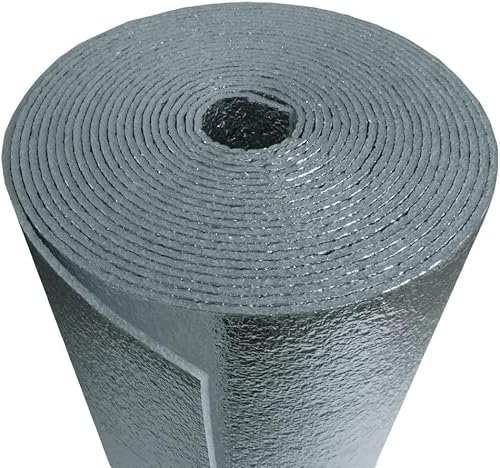
This version extends coverage to 400 square feet with a 4 ft by 100 ft dimension. The double-sided reflective foam core construction keeps moisture and heat transfer under control, meeting Class 1 / Class A fire-rated standards and ASTM certifications. The larger roll is beneficial for extensive duct networks, reducing the need for multiple joints and improving installation efficiency. As with other R-8 wraps, it’s designed to deliver consistent thermal protection across the duct surface.
US Energy 2×20 Duct Wrap – Compact Option

At 2 ft by 20 ft, this compact roll is suited for smaller duct segments or renovation projects where space and handling are considerations. It maintains the same R-8 performance with a double-sided reflective foam core and a 1/4 inch thickness. Classified as Class 1 / Class A fire rated and ASTM certified, it aligns with safety and energy goals for tight installations, noise reduction, and condensation control on smaller scale runs.
EcoFoil R-8 Duct Insulation Wrap

EcoFoil’s R-8 duct wrap uses a multi-layer reflective bubble foil construction to maximize energy efficiency. The product includes two spacer strips to maintain necessary air gaps and enhance installation quality. It is lightweight, non-toxic, and designed to help reduce energy usage while preventing duct condensation. The insulation is paired with a code certification strip for inspector-friendly documentation, supporting compliance in both commercial and residential projects.
TWCUSEP Reflective FRK Duct Wrap

TWCUSEP’s reflective FRK duct wrap features a fiberglass core laminated to a vapor retarder, designed to meet NFPA 90A and 90B and other mechanical energy codes. This option emphasizes flexibility, ease of installation, and condensation prevention, enhancing thermal comfort for occupants. The product’s FRK facing supports long-term reliability in varied climate zones and installation contexts.
Buying Guide
- Fire safety: Look for Class 1 / Class A fire ratings and ASTM certification to ensure compliance with building codes and safer installation in ducts carrying air for living spaces.
- Thermal performance: R-8 is a common target for duct insulation; verify that the product maintains its rating across layers and is suitable for your duct diameter and run length.
- Moisture and condensation control: Double-sided reflective foams and vapor barriers help prevent condensation, reducing mold risk and improving energy efficiency.
- Ease of installation: Consider roll size, weight, and whether the product includes spacers or pre-attached facings to simplify mounting on existing ducts.
- Air quality and safety: Choose non-toxic materials with low off-gassing and compliant labeling for indoor installations, especially in occupied spaces.
- Durability: Waterproof or heavy-duty scrims extend duct life in attics, basements, and crawl spaces where moisture exposure or physical abrasion can occur.
- Fit and compatibility: Check width and thickness relative to your duct dimensions; some products are optimized for round ducts, others for rectangular runs.
- Code documentation: A product with inspector-friendly labeling or a certification strip can streamline project approvals and inspections.
- Budget vs. coverage: Compare cost per square foot and total contact area to determine the most economical option for the project size.
Overall, R-8 duct wrap insulation choices balance thermal resistance, moisture control, and fire safety. For larger duct networks, selecting higher coverage rolls reduces the number of seams, while compact options suit smaller installations or retrofit projects. Practical installation considerations, code compliance, and project-specific climate conditions should guide the final selection.