Best Portable Roll Forming Machines for On‑Site Metalwork
Investing in portable roll forming machines expands on-site fabrication capabilities, enabling quick bends, seams, and panel fabrication wherever the job calls. This guide highlights five reliable options, focusing on versatility, build quality, and portability to help professionals choose the right tool for aluminum, steel, copper, and other metals. Each product is assessed on its rugged construction, ergonomic features, and productive performance to support framing, roofing, jewelry making, and automotive panel work.
| Product | Brand | Key Strength |
|---|---|---|
| VEVOR Slip Roll Machine, 24-Inch | VEVOR | Detachable rollers, smooth surface |
| DISJEST 3-Station Edge Roller | Disjest | 0-90° bends, portable 3-station design |
| WYDDDARY Portable Standing Seam Machine | WYDDDARY | High power, 360° seam capability |
| BIXIBIN Portable Jewelry Rolling Mill | BIXIBIN | 3-in-1 rollers, durable |
| AYLYOTOY Manual Bead Roller | AYLYOTOY | Crank control, high forming capacity |
VEVOR Slip Roll Machine, 24-Inch Forming Width
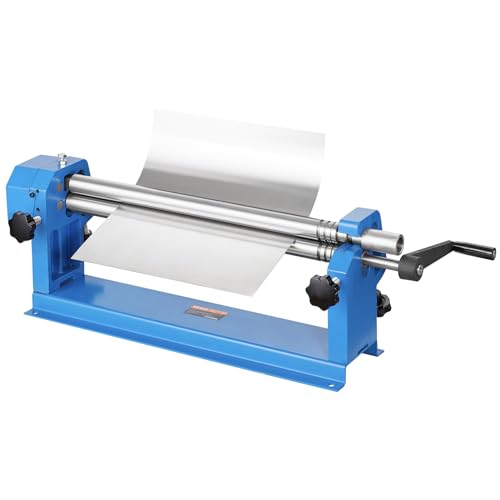
The VEVOR Slip Roll Machine offers a 24-inch forming width and a 16 gauge capacity, enabling efficient sheet metal rolling for aluminum, copper, and light steels. A key feature is the upgraded roller surface achieved through precision grinding, which reduces friction and scratches to produce smooth, uniform results. Detachable rollers enable quick upper shaft removal for faster part access, supporting streamlined workflows on busy shop floors. Enhanced gear gap precision improves engagement for steadier, more predictable operation, reducing drift during long sessions.
DISJEST 3-Station Edge Roller for Bending Metal Roofing

This 3-Station Edge Roller is designed for precise bends in metal roofing sheets with a 0-90 degree range. It functions as both a roll bender and metal former, delivering consistent seams, beads, and edges. The portable, compact design makes it easy to transport to job sites, enabling continuous bending without length restrictions. A depth gauge and V-shaped rollers help secure the material and minimize errors, delivering clean standing seams and professional-looking seams for roofing projects.
WYDDDARY Portable Standing Seam Machine

The WYDDDARY standing seam machine leverages a 2400W motor to handle 15-20 m/min seam formation on 470/475 panel models, with a 360° mechanical lock for secure tight seams. A nylon handle provides a comfortable grip for extended use, and the ergonomic design reduces fatigue. An adjustable clutch lets operators tune the machine to different panel thicknesses, delivering consistent, professional seams across varied projects while maintaining manageable control during continuous operation.
BIXIBIN Portable Jewelry Rolling Mill

The BIXIBIN rolling mill is a versatile 3-in-1 tool designed for jewelry making, capable of processing gold, silver, copper, and other metals into sheets, square wires, and semicircular wires. It uses heat-treated 55HRC steel rollers and a robust cast-iron hand crank, all mounted on a durable A3 steel frame, ensuring long-lasting wear resistance. The 3:1 gear ratio and oversized gears help reduce manual effort while maintaining smooth, controlled rolling for precise results across various jewelry applications.
AYLYOTOY Manual Bead Roller Machine

The AYLYOTOY manual bead roller provides 12-inch sheet rolling with six dies and an 18-gauge capacity, making it suitable for automotive panels and smaller metal projects. It uses a gear-driven design for higher forming capacity and a freely controllable handle for precise control. The manually operated crank offers a safe, free-control workflow without electricity, enabling dependable operation in field and shop settings while producing consistent, accurate bends and shapes.
Buying Guide
- Forming width and material capacity: Choose a machine that matches your typical sheet thickness and desired bend width. Larger widths are suited for bigger panels but weigh more to transport.
- Portability vs. stability: Consider the balance between a light, portable unit and a model with a heavier frame for stable operation on uneven surfaces.
- Power source and speed: High-wattage motors enable faster seam formation, but manual or lower-power models can be sufficient for smaller projects and field work.
- Roller construction and accessibility: Hardened steel rollers and detachable components reduce wear and simplify maintenance, while user-friendly access improves serviceability.
- Precision features: Depth gauges, V-shaped rollers, and clutches help ensure consistent results across multiple pieces and varying material thicknesses.
- Versatility: 3-in-1 or multi-roller configurations expand capabilities for sheets, beads, and wires, which is valuable for jewelry, automotive, and roofing applications.
- Durability and serviceability: Look for robust frames (cast iron or steel), heat-treated rollers, and readily available replacement parts to maximize lifecycle and uptime.
- Safety and ergonomics: Ergonomic handles, balanced weight, and safe operation features reduce fatigue and risk during extended use.
When selecting a portable roll forming machine, align features with project requirements, such as the need for roofing seams, jewelry sheet work, or general metal fabrication on job sites. Consider how often you’ll transport the unit, the types of materials you’ll process, and the level of precision required for final results.