Best Polymer Epoxy for Stainless Steel: Durable Metal Repair Solutions
Choosing the right epoxy or polymer repair compound is essential for restoring stainless steel, especially when durability, corrosion resistance, and machinability matter. This article examines top polymer epoxies and epoxy putties designed for stainless steel and other metals. Each option balances cure time, strength, and compatibility with metal surfaces to help you pick the best match for your project.
The following quick reference table highlights five commonly used polymer epoxy products and their standout traits. Use it to compare core capabilities at a glance.
| Product | Brand | Key Benefit |
|---|---|---|
| J-B Weld SteelStik 8267 | J-B Weld | |
| Devcon 52345 Plastic Steel Epoxy | Devcon | |
| ABATRON SS-Bond P | Abatron | |
| J-B Weld KwikWeld 8276 | J-B Weld | |
| KEWEIYOW Metal Glue | KEWEIYOW |
J-B Weld SteelStik 8267 – Steel Reinforced Epoxy Putty
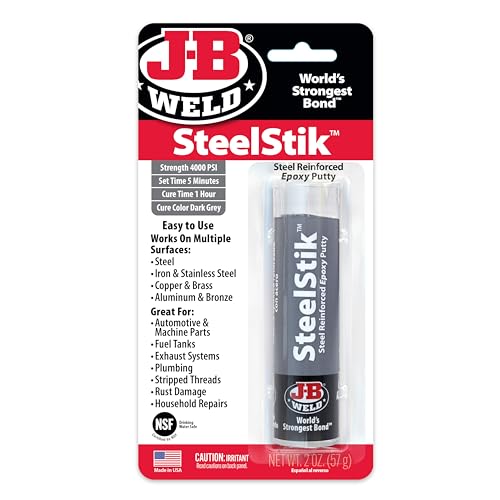
J-B Weld SteelStik 8267 is a hand-mixable two-part epoxy putty that blends steel reinforcement with a non-rusting formulation. The putty is NSF-certified and safe for contact with potable water. After kneading, it sets in about five minutes and cures fully in roughly one hour. This rapid cure is valuable for temporary or emergency repairs where downtime must be minimized. The cured material achieves a strong bond and can withstand continuous temperatures up to 350°F (176°C) and intermittent peaks to 450°F (232°C). It resists many automotive fluids and chemicals after curing, making it a practical option for stainless steel fixtures, housings, or damaged components. The material can be molded, shaped, sanded, drilled, and tapped, offering versatility for electrical housings, brackets, and plumbing fittings that involve stainless steel surfaces.
Strengths include a high lap shear strength in the range around 900 psi, steel reinforcement for rigidity, and good chemical resistance. Consider this option when you need a fast, metal-moldable repair putty for stainless steel that also tolerates exposure to light industrial solvents. For best results, clean and roughen the metal surface, knead until uniform color, apply to the fracture or hole, and allow curing in a stable environment away from moisture or direct heat during the initial stage.
Devcon 52345 Plastic Steel Epoxy – 1 Oz

Devcon 52345 Plastic Steel Epoxy is a two-part cold-welding epoxy designed to bond metal, including steel, stainless steel, aluminum, and copper. It ships as two separate one-ounce tubes, resin and hardener, with a straightforward mix ratio. Once combined, the compound delivers high strength suitable for metal-to-metal repairs. The formulation supports bonding and rebuilding parts where a traditional weld is impractical or impossible due to heat sensitivity or accessibility constraints. The epoxy is compatible with a range of metals and can be used to repair small structural components, brackets, and fixtures on stainless steel surfaces. It cures to a hard, paintable surface suitable for further finishing or machining if required.
Engineers and DIY enthusiasts often select this option for its predictable cure behavior and compatibility with multiple metals. When applying, ensure surfaces are clean, dry, and free from oils. A thorough mix is essential to achieve uniform hardness and optimal bonding strength. For best results, apply within the working time indicated, then allow full cure under stable conditions before loading the repaired part.
ABATRON SS-Bond P – Stainless Steel-Filled Epoxy

Abatron SS-Bond P is a heavy-duty, two-part stainless steel-filled epoxy designed for permanent repairs, bonding, and filling of metal and other rigid surfaces. Its strength and machinability make it suitable for decorative or structural metal components, including exterior or interior applications. The cured epoxy can be machined with standard tools and is paintable, enabling seamless finishing on stainless steel surfaces like window frames, gates, tanks, and engines. The product is well-suited for restoring worn or damaged metal components where a durable fill or bond is required. SS-Bond P supports a broad range of substrates beyond steel, enhancing its versatility for mixed-material projects.
When considering this option, assess the repair’s structural demands, exposure to moisture or chemicals, and the need for post-curing finishing. The epoxy’s ability to be shaped and painted after curing adds value for mounting brackets, rails, or decorative metalwork on stainless steel frameworks. Prepare surfaces by cleaning and roughening as needed, mix thoroughly, apply evenly, and allow adequate cure time before subjecting the repair to load or movement.
KEWEIYOW Metal Glue – 1.76oz Heavy Duty Epoxy

KEWEIYOW Metal Glue provides a two-part epoxy system designed for high-temperature resistance and bonding across metals, plastics, ceramics, and more. The 1.76-ounce syringe package includes a user-friendly ratio and applicator tools, enabling precise mixing and easy application. This epoxy resin glue is formulated to resist heat and moisture, suitable for repairs on engines, tanks, pipes, and metal components exposed to elevated temperatures. It’s marketed as a versatile option for metal-to-metal, ceramic-to-metal, and other combinations where a robust joint is needed. The product emphasizes ease of use, strong adhesion, and a lower-cost alternative to welding in many hobbyist or repair contexts.
When choosing KEWEIYOW for stainless steel, verify surface prep requirements and environmental exposure. Proper curing conditions (temperature and humidity) will influence final strength. While it offers a strong bond, larger structural repairs may benefit from backing or mechanical fasteners in addition to the epoxy. Evaluate cure time against your project schedule and consider post-cure finishing to match the stainless steel aesthetic if visible.
Buying Guide: Polymer Epoxy For Stainless Steel
- Surface preparation: Clean, degrease, and roughen the stainless steel surface to improve adhesion. Remove any corrosion or contaminants before applying epoxy.
- Type and cure time: Choose between putty, two-part epoxy, or spray formulations based on the repair geometry and required cure speed. Fast-setting products are useful for emergency fixes, while longer cure times may yield stronger, more durable bonds.
- Strength and temperature: Consider tensile or shear strength ratings and the temperature range the repair will encounter. Stainless steel components in engines, piping, or outdoor hardware often demand higher heat resistance.
- Chemical resistance: If the repaired part contacts oils, solvents, or hydraulic fluids, select a formula with demonstrated chemical resistance after curing.
- Machinability and finishing: Some epoxies can be sanded, tapped, drilled, or painted after curing. If surface finishing matters, verify machinability and paint compatibility.
- Compatibility with metals: While most epoxies bond well to stainless steel, some formulations target specific metals better. Review the product’s metal compatibility list to ensure strong adhesion.
- Safety and certifications: NSF certification for potable water contact or other safety credentials can influence product choice for plumbing or appliance repairs.
- Work environment: Temperature, humidity, and ventilation impact curing. Some products perform best at room temperature, while others tolerate variance.
- Repair scope: For structural or load-bearing repairs, consider combining epoxy with mechanical fasteners or reinforcement for added safety.