Best Light Gauge Stainless Steel Wire for Jewelry Making and Crafting
Choosing the right light gauge stainless steel wire can improve flexibility, shaping accuracy, and long-term durability in jewelry and craft projects. This guide highlights five suitable options, explains what makes each one stand out, and compares key factors such as gauge, length, and corrosion resistance. Whether you’re stringing beads, crafting delicate components, or shaping wire lace, the right 18–20 gauge stainless steel wire offers balance between pliability and strength.
| Product | Brand | Gauge | Length | Material |
|---|---|---|---|---|
| Cridoz 18 Gauge Stainless Steel Wire | cridoz | 18 | 85 ft | 304 stainless steel |
| FIVEIZERO 20 Gauge Stainless Steel Wire | FIVEIZERO | 20 | Various (up to shown) | 304 stainless steel |
| Yountiger 20 Gauge Stainless Steel Wire | Yountiger | 20 | 164 ft | 304 stainless steel |
| Novacave 16 Gauge Stainless Steel Wire | Novacave | 16 | 140 ft | 304 stainless steel |
| Master Wire Supply 20 Gauge Stainless Steel Wire | Master Wire Supply | 20 | 50 ft | 316L stainless steel |
Product selections focus on corrosion resistance, bendability, and length for versatile crafting. Each option supports jewelry making, beading, and light sculpture, enabling reliable handling and shape retention in final pieces.
Cridoz 18 Gauge Stainless Steel Wire For Jewelry Making

The Cridoz wire uses 304 stainless steel for robust strength with flexibility suitable for wrapping and shaping. It is designed to be bendable and maintain its form after reuse, and it is treated to resist tarnish through annealing. The wire diameter is approximately 0.8–1.0 mm (18 gauge) with a substantial length of 85 feet, providing ample material for multiple designs or larger projects. The combination of rust resistance and malleability supports beadwork, clasps, and decorative wirework in jewelry crafting.
Features include easy handling for hand shaping, tarnish resistance to preserve a bright appearance, and a practical length that supports a range of projects from delicate clasps to decorative wire wraps.
FIVEIZERO 20 Gauge Stainless Steel Wire

This 20 gauge wire from FIVEIZERO is crafted from high-quality 304 stainless steel, offering corrosion resistance, durability, and a smooth surface for consistent results. The product line includes multiple gauges (18–28), enabling users to pick the ideal thickness for necklaces, bracelets, earrings, or mixed-gauge projects. A mixed-gauge option is also available for those who want a ready-to-use assortment. The wire’s round cross-section distributes force evenly, enhancing practice with bead stringing and intricate wirework.
Key notes include its round shape for even loading, a glossy metallic finish, and versatility across jewelry and craft applications. The availability of several gauges helps beginners and pros tailor projects without switching materials.
Yountiger 20 Gauge Stainless Steel Wire

The Yountiger 20 gauge wire offers a robust 164 ft spool of 304 stainless steel, balancing strength and flexibility for jewelry making and decorative crafts. Its corrosion resistance supports long-term wear in humid environments or with exposure to handling oils. The length is well-suited to larger designs or multiple projects, making it a practical choice for braid patterns, wire-wrapped beads, and structural components. The wire’s bendability supports detailed shaping without kinking, enabling precise control during assembly.
Users benefit from reliable rust resistance and a smooth surface for easy threading and wrapping. The long length helps reduce project interruptions and helps with frame-building and beaded accents alike.
Novacave 304 Stainless Steel Wire, 1 lb Spool

The Novacave wire is a 304 stainless steel option with 16 gauge (approximately 1.3 mm), supplied on a 1 lb spool and totaling around 140 feet. This gauge sits on the heavier side of light wires, providing more structure for craft projects that require a sturdier base while remaining workable for wrapping, forming, and decorative work. The alloy choice supports oxidation resistance, making it suitable for longer-term use in environments prone to moisture and humidity.
Key considerations include gauge suitability for delicate vs. bold designs, spool weight for storage and handling, and corrosion resistance that supports steady performance over time. It is a strong candidate for link work, wire weaving, and anchor points in jewelry pieces.
Master Wire Supply Stainless Steel Wire, 20 Gauge
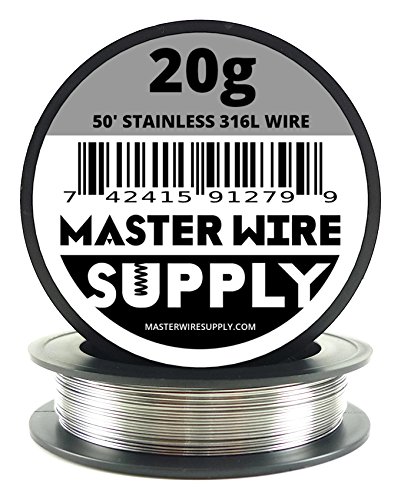
This 20 gauge wire from Master Wire Supply is a versatile option described as suitable for foam cutters, package seals, hair dryers, kilns, and jewelry applications. The mention of multiple usages signals a robust, general-purpose stainless steel wire that holds its shape and resists corrosion under regular crafting conditions. It is a compact 50 ft length, which is adequate for single-project tasks or quick wrap-and-detail work. The 316L designation indicates a high level of corrosion resistance, beneficial for prolonged exposure to air and moisture during crafting or display.
Considerations include gauge compatibility with delicate beadwork, the availability of longer spools if needed, and the practical trade-off between rigidity and flexibility for specific designs.
GHS Strings – 5-String Banjo Strings (Stainless Steel) 009-020

Although primarily a musical product, these stainless steel strings highlight the durability and corrosion resistance that stainless steel can offer in various wire applications. The regular light gauge range (009-020) demonstrates how consistent, high-turity stainless steel performs under tension, which can inform choices for wire wrapping and structural components in craft contexts. The packaging emphasizes freshness and longevity, indicating reliable performance for long-term projects where high tensile strength is valuable.
For jewelry and craft projects, these insights translate to selecting a wire with stable tension, minimal finger wear, and dependable surface finish during handling and assembly.
Buying Guide: Key Purchase Considerations And Comparisons
- Gauge choice: Lighter gauges (18–20) offer greater pliability for wrapping, bead stringing, and delicate detailing. Heavier options (16–18) give more structure and durability for longer, bolder designs. Consider your project’s required finesse and the level of detail you want to achieve.
- Material and corrosion resistance: All selected wires use 304 or 316L stainless steel, which resist rust and oxidation. For outdoor or humid environments, prioritize higher corrosion resistance (316L) and surface finish stability to prevent tarnish over time.
- Length and spool size: Longer lengths reduce reordering interruptions for larger projects. Spool weight and length affect handling, storage, and prep time. Plan for your typical project scale to determine whether a 50 ft, 85 ft, 140 ft, or 164 ft supply fits your workflow.
- Surface finish and bendability: A smooth surface reduces snagging on beads and components. Round cross-sections distribute bending forces evenly, helping maintain shape during manipulation and wear.
- Versatility vs. specialization: Some wires are marketed with multiple gauge options or mixed gauges to cover various needs, while others are dedicated to a single gauge. For beginners, mixed gauges can simplify experimentation; advanced crafters may prefer a single gauge tuned to their signature techniques.
- Compatibility with tools: Ensure wire thickness matches your pliers, bead cups, and mandrels. Very thin wires may require precision tools to avoid kinking or deformation during shaping.
- Storage and handling: Keep wires in a dry environment to avoid corrosion, especially if long-term storage is anticipated. Labeling by gauge helps prevent mix-ups during future projects.
- Pricing and value: Compare price per foot and spool size to gauge value. Larger spools often offer a better price-per-foot ratio, but shorter lengths can be more practical for trial projects.
Overall, selection should balance gauge, length, and corrosion resistance with the specific craft technique you intend to use. For jewelry assembly and delicate wirework, 18–20 gauge wires from reputable brands provide dependable performance with manageable stiffness and good shaping control.