Best Hay and Grain Feeders for Farms: Durable 2-in-1 Racks and Troughs
Finding reliable hay and grain feeders is essential for efficient livestock care. The following selections cover wall-mounted racks, portable troughs, and heavy-duty designs suitable for goats, sheep, horses, and cattle. Each option combines hay storage with grain feeding, helping reduce waste and keep feed clean. Below is a quick overview of the featured products and their key specs to help you compare at a glance.
| Product | Capacity | Design | Best For | Format |
|---|---|---|---|---|
| VEVOR Wall Mounted Hay Rack, 18.5 Gallon | 21 gallons volume (hay rack) | 2-in-1 hay rack and grain tray, wall-mounted | Goats, sheep, small herds | Wall mount |
| VEVOR 2 in 1 Livestock Hay Feeder, 80-Gallon Capacity | 56 gallons hay, 24 gallons grain | Free-standing long trough with deeper feeding pan | Goats, multiple animals | Floor/stand |
| Wall Mount Hay Rack, 2 in 1 Feeder (YXJSTO) | High-capacity bottom groove, adjustable distance | Wall or fence mount, 2-in-1 feeder | Goats, sheep, horses | Wall/fence mount |
| GOATZY Wall Mount Hay Feeder | 25 gallon hay rack, 25 gallon observation trough | 2-in-1 with roof; hinged roof for dry hay | Goats, sheep, horses | Wall mount |
| Oxphanor Pasture Hay Feeder | 45 gallon top, 24 gallon bottom | Dual compartments; easy assembly | Goats, calves, cattle, horses | Portable pasture feeder |
VEVOR Wall Mounted Hay Rack, 18.5 Gallon Livestock Feeder
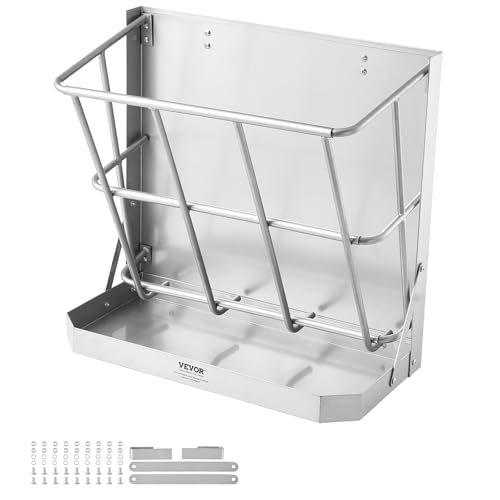
Durable construction combines premium Q235 carbon steel with galvanized panels via full-welded craftsmanship. The 2-in-1 design merges a hay rack with a grain tray, reducing clutter and streamlining feeding. Its large 21-gallon capacity supports up to five goats, minimizing refill frequency while withstanding harsh outdoor conditions. The unit is rust-resistant and built for long-term outdoor use, ideal for small- to mid-sized herds and mixed-species farming environments.
VEVOR 2 in 1 Livestock Hay Feeder

This 80-gallon capacity feeder features a two-in-one design with a hay trough and a deeper feeding pan. It provides a spacious 56 gallons of hay capacity and 24 gallons for grain, designed to feed 10-12 goats simultaneously. Built with high-quality Q235 carbon steel and galvanized panels, it resists rust and corrosion. The design helps reduce hay waste through a broad top opening and roomy trough, suitable for larger goat herds or small sheep operations.
Wall Mount Hay Rack, 2 in 1 Feeder (YXJSTO)

Made from galvanized steel with a high-temperature finish, this wall-mount feeder offers a durable, moisture-resistant solution. The double L-hook allows adjustable mounting distance, enabling installation on walls or fences. A high-capacity bottom groove helps prevent hay overflow, keeping the feed area tidy. This feeder suits goats, sheep, and horses and emphasizes easy installation and long-term outdoor performance.
GOATZY Wall Mount Hay Feeder with Roof

This 2-in-1 wall-mounted feeder combines a 25-gallon hay rack with a 25-gallon grain trough and includes a hinged, roofed hay rack to protect forage from weather. The roof aids in keeping hay dry, reducing waste and spoilage. It also offers flexible mounting as wall or fence-hanging, making it suitable for goat, sheep, and horse housing setups. The design emphasizes clean feeding and weather protection in outdoor environments.
Oxphanor Pasture Hay Feeder 45 Gallon

This pasture feeder offers a 45-gallon top hay rack plus a 24-gallon bottom grain pan, providing dual compartments for separate forage and feed. Constructed from galvanized steel with a black powder-coated finish, it’s designed to endure outdoor farming conditions. The design prioritizes easy assembly and efficient feeding, reducing waste and enabling continuous access to nutrition for goats, calves, cows, and horses in pasture settings.
Heavy Duty Hay Feeder For Goats – 45 Gallon Top

This heavy-duty feeder combines a 45-gallon top hay rack with a 24-gallon grain tray, designed for goats, horses, calves, and other livestock. It uses thick galvanized steel with a weather-resistant finish to resist outdoor elements. The feeder emphasizes separate hay and grain compartments to minimize waste and keep feed clean, aligning with best practices for healthy livestock feeding habits.
Buying Guide: Key Considerations For Choosing Hay And Grain Feeders
- Capacity and scalability: Assess herd size and whether you need a single large unit or multiple smaller feeders. Larger capacities reduce refill frequency but require more space.
- 2-in-1 design vs. separate feeders: 2-in-1 models save space and simplify feeding, but ensure the layout keeps hay dry and accessible. Consider whether you need a deeper grain pan or a protected hay rack with a roof.
- Mounting method: Wall-mounted feeders save floor space and keep feed off the ground, while free-standing or portable models offer mobility for rotating pastures or pen changes.
- Material durability: Look for galvanized steel or stainless steel components with rust and corrosion resistance for outdoor use. Full-welding and high-quality hardware extend lifespan in harsh environments.
- Waste reduction features: Bottom grooves, higher rims, and stable mounting reduce hay and grain spillage, saving feed costs and keeping the area cleaner.
- Weather protection: Roofed designs help keep hay dry and reduce spoilage, especially in rainy or snowy regions.
- Ease of assembly and maintenance: Simple assembly minimizes downtime. Choose feeders with accessible cleaning surfaces and removable trays if possible.
- Animal compatibility: Verify the feeder’s dimensions and trough heights align with your livestock’s size and feeding behavior to prevent injury and promote efficient eating.
- Portability vs. permanence: Portable options are practical for rotational grazing, show sites, or temporary setups; permanent installations are preferred for consistent daily feeding in a fixed location.
- Safety features: Avoid sharp edges, ensure secure mounting, and select materials that won’t splinter or corrode to prevent injuries.
These considerations help balance durability, ease of use, and feed efficiency. When choosing hay and grain feeders, prioritize models with integrated waste-management features, weather resistance, and suitability for your specific livestock mix. The listed options provide a range of capacities, mounting styles, and price points to accommodate different farming operations.