Best Gear Roll Tester Machine for Jewelry and Metalwork
The following selections focus on gear-assisted rolling, forming, and related metalworking tasks. This article compares five practical tools that help jewelers, hobbyists, and small studios achieve consistent thickness, texture transfer, and reliable rolling performance. The featured items cover manual rolling mills, roll grooving, and precision gears, highlighting how gear ratios reduce effort and improve results in cold-rolling processes.
| Product | Brand | Use Case |
|---|---|---|
| Eapmic Manual Jewelry Rolling Mill | Eapmic | Jewelry rolling, metal sheet shaping |
| RIDGID 25638 Roll Grooving Machine | RIDGID | Pipe grooving, manual and power drive |
| LJIA Manual Rolling Mill Machine | LJIA | Flattening and shaping with 3″ roller |
| Yukon Gear & Axle Roll Pin | Yukon Gear & Axle | Cross pin and differential components |
| QuinteZhenTially Sausage Tying Machine | QuinteZhenTially | Tabletop tying and metalwork aid |
Eapmic Manual Jewelry Rolling Mill Overview
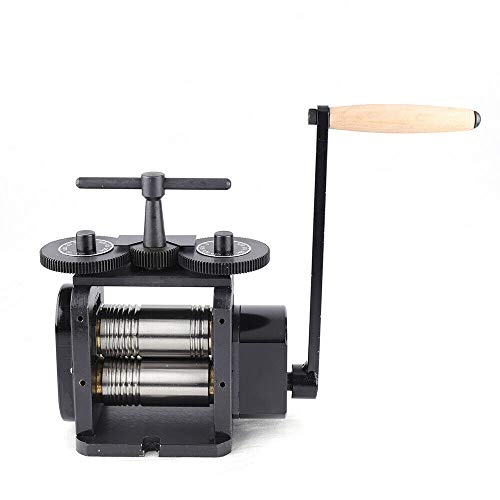
The Eapmic rolling mill uses a 4:1 gear ratio, meaning four turns of the handle move the roll once. This design reduces the force required to shape metal and speeds up the cold rolling process. The mill is built with a forged steel handle and an integral gear system that resists deformation, ensuring durability. It is well-suited for jewelers and craft studios that routinely produce thin metal sheets and transfer textures across pieces.
Its wide application makes it a practical addition to any jewelry design workshop. The unit emphasizes ergonomics and long service life, aligning with professional expectations for precision rolling and consistent results across sessions.
RIDGID 25638 Roll Grooving Machine

The RIDGID 25638 is a versatile 2-in-1 tool that can be mounted on a Power Drive for machine-powered roll grooving or used manually in-place. It features patented auto-tracking technology to keep the pipe engaged during grooving, optimizing accuracy and ease of operation. A permanently fixed depth setting gauge provides quick, repeatable setups, contributing to consistent groove depths across multiple jobs.
Designed for both professional plumbing tasks and hobbyist projects, this groover emphasizes reliable performance, straightforward setup, and compatibility with standard pipe sizes. It pairs well with sessions that require precise groove profiles and repeatable results.
LJIA Manual Rolling Mill Machine

The LJIA Manual Rolling Mill Machine features a 3″ roller designed for portability and practical flattening tasks. The manual operation provides direct control over the thinning and shaping process, making it adaptable for small-scale jewelry work or handcrafted metal pieces. The rolling mill emphasizes durability and ease of use, supporting consistent results whether you’re at home or in a workshop.
Its portable design and sturdy construction enable flexible workflows, allowing users to tackle both delicate texture transfers and heavier flattening needs as part of a jewelry-making or metalworking project.
QuinteZhenTially Sausage Tying Machine

The QuinteZhenTially device is a stainless steel, hand-rolling tool designed for sausage tying and linking. While not a jewelry or metal-forming rolling mill, it demonstrates a gear-assisted approach to controlled manual processing, with metal gears and a tabletop design suitable for restaurant-grade or home kitchens. The 45mm diameter specification accommodates a range of sausage products, and its 50 knots per minute capability highlights its efficiency in tying tasks.
For readers exploring a diverse set of gear-assisted tools, this device illustrates how precision mechanics can translate across different crafts—from food production to metalworking—emphasizing clean design, hygiene, and efficient operation.
Buying Guide: Gear Roll Tester Machine And Rolling Tools
- Gear ratio and force reduction: Look for higher gear ratios (e.g., 4:1) that reduce operator effort without sacrificing control or precision. A well-made gear train improves consistency across repeated passes.
- Material and durability: Choose rolling mills with forged steel handles, robust housings, and high-strength gears for long service life, especially in demanding jewelry or metalwork environments.
- Roll size and versatility: A 3″ or similar roller diameter offers good flexibility for a range of metals and thicknesses. Consider if you prefer single or dual-roller configurations for texture transfer and thinning tasks.
- Portability vs. stability: Portable mills are convenient, but ensure they have a stable base and secure mounting options to prevent slippage during use.
- Integrated features: Some models include depth gauges or auto-tracking mechanisms that save setup time and improve repeatability on multi-piece runs.
- Compatibility with accessories: Check whether the tool supports compatible accessories such as texture rollers, additional gears, or replacement parts, increasing versatility over time.
- Use-case alignment: Prioritize products whose primary application matches your needs—jewelry sheet production, texture transfer, pipe grooving, or general metal forming.
- Maintenance considerations: Look for easy-clean surfaces and accessible hardware. Durable finishes prevent rust and ensure reliable performance between projects.
- Price vs. value: While higher-end mills offer more features, assess whether the gear quality, warranty, and material build justify the price for your scale of work.
- Safety and ergonomics: Ergonomic handles and smooth operation reduce fatigue during long sessions and help maintain precision across multiple pieces.