Best Cassava Starch Processing Machine for Efficient Milling and Grinding
Cassava starch processing is a key step for many kitchens and small to mid-size operations. The following selected machines are designed to grind, pulp, and separate starch from cassava and related tubers. Each product is evaluated for durability, automation, and versatility to help buyers compare options for home use and small businesses.
| Product | Brand | Key Use | Motor/Power | Material |
|---|---|---|---|---|
| Commercial Electric Sweet Potato Cassava Grinder Crusher | QVJ | Grinding and pulping cassava tubers | 2200W | Stainless Steel |
| QVJ Commercial Electric Sweet Potato Cassava Taro Wet Starch Grinder | QVJ | Pulping and making wet starch | Not specified | Stainless Steel |
| Stainless Steel Sweet Potato & Cassava Starch Grinder | Generic | Crushing tubers for starch | Not specified | Stainless Steel |
| TXMACHINE Cassava Mill Electric (no motor) | TXMACHINE | Root crop grinding into powder | 2HP/1.5KW option | Stainless Steel |
| TXMACHINE Cassava Mill Electric (with motor) | TXMACHINE | Root crop grinding into powder | 2HP/1.5KW option | Stainless Steel |
QVJ Commercial Electric Sweet Potato Cassava Grinder Crusher
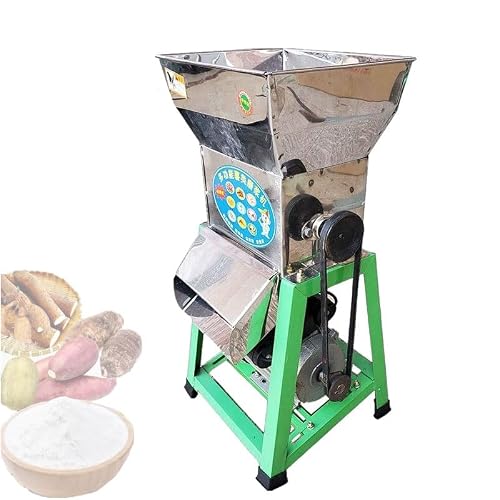
TheAutomatic operation design reduces manual labor while boosting throughput. Constructed from durable stainless steel, this unit emphasizes hygiene and longevity in food processing. A powerful 2200W motor enables fast cassava grinding and pulping, supporting efficient starch preparation for commercial or home use.
QVJ Commercial Electric Sweet Potato Cassava Taro Wet Starch Pulping
This model specializes in pulping tubers like cassava, taro, and sweet potatoes for wet starch production. It is designed for crushing and processing, followed by filtering and drying stages. Its stainless steel structure supports durability, sanitation, and easier maintenance for ongoing starch production in small facilities.
Separating Starch Machine For Cassava And Sweet Potatoes

This unit emphasizes starch separation with a larger capacity and elongated separation barrel. It supports a 110V/60Hz or 220V/50Hz operation and stainless steel construction. Designed to maximize starch yield while simplifying cleaning and maintenance, it is suitable for sweet potato, cassava, lotus root, and related tubers.
QVJ Commercial Electric Sweet Potato Cassava Taro Wet Starch Pulping Kudzu Root Starch Grinder (Stainless Steel)

Designed to crush tubers into healthy starch after pulping, this stainless-steel model supports robust processing with the flexibility to handle potatoes, cassava, taro, and similar roots. It notes compatibility with various tubers and emphasizes customization through its stainless construction for long-term use.
Stainless Steel Sweet Potato & Cassava Starch Grinder
This versatile grinder handles a range of root crops, including cassava and sweet potatoes, for starch production. It also highlights the potential to crush other ingredients like garlic, onion, and ginger. Emphasizing durability and efficiency, the unit is positioned for both home cooks and small businesses, with attention to cleanability and energy efficiency.
TXMACHINE Cassava Mill Electric (No Motor)
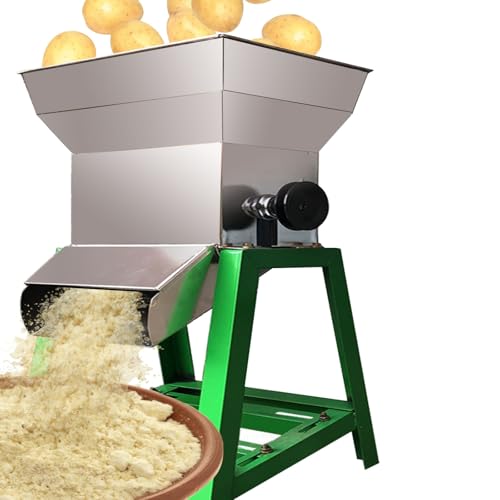
This unit supports motor customization with a 2HP/1.5KW option and allows selection of different voltages. It is suitable for processing cassava and other root crops into powder, making it viable for small production spaces that require flexible power configurations and durable stainless steel construction.
TXMACHINE Cassava Mill Electric (With Motor)

This model features an embedded motor option and same core capabilities as its motorless counterpart. It supports processing sweet potato, cassava, potato, taro, lotus root, and other tubers into powder. With stainless steel components, it aims to deliver consistent performance in both home and small commercial settings.
Buying Guide
- Intended use: Determine whether you need pulping, grinding, or starch separation. Choose a model that covers your primary workflow (e.g., pulping for wet starch vs. dry powder production).
- Motor and power: Review motor wattage and voltage options. Higher power supports faster throughput but may require more robust electrical setup.
- Material and hygiene: Stainless steel construction improves durability and sanitation, important for food processing and easy cleaning.
- Automation level: Fully automatic vs. semi-automatic units affect labor needs and consistency of output; consider your staffing and volume goals.
- Capacity and scale: Look for stated capacity (kg/h or similar) to match your production needs—from home use to small business.
- Versatility: Some machines support multiple roots and tubers (cassava, taro, yam, potato, lotus root). A multi-use unit can simplify procurement.
- Maintenance: Check for replaceable parts, ease of disassembly, and availability of spare components to minimize downtime.
- Power configuration: Some models offer multiple voltage options or require external power sources; verify compatibility with your facility’s power supply.
- Cleaning and sanitation: Choose models with accessible drainage and smooth surfaces to facilitate hygiene protocols.