Best Stainless Steel Tubing for 2205 Duplex Applications and Alternatives
When selecting tubing for 2205 duplex stainless steel projects, the right size, wall thickness, and corrosion resistance are critical. This guide highlights five relevant tubes from reputable brands, covering common diameters and materials that pair well with duplex steel environments. Each product is linked to Amazon for quick reference, with practical notes on fit and installation considerations for U.S. installations.
| Product | Brand | Diameter | Length | Notes |
|---|---|---|---|---|
| 2″ OD Brushed Stainless Steel 316 Grade Tube | Top Hardware | 2″ OD | 60″ | 316 grade stainless; 16 gauge; tight tolerance |
| 2 Pack 1″ OD 304 Stainless Steel Pipe | Zepkouel | 1″ OD | 20″ | Two tubes; 304 stainless; 1.5 mm wall |
| Hicarer 2 Pcs 1″ OD 304 Tubing | Hicarer | 1″ OD | 24″ | Two tubes; 1.5 mm wall; weldable |
| 2″ OD X 0.12″ Wall Stainless Steel Tubing | Generic | 2″ OD | 54″ | 304 stainless; welded tubing |
| GEPPHILL 304 Stainless Coil Tubing 1/2″ OD | GEPPHILL | 1/2″ OD | 25 ft | Coiled; 304 stainless; corrosion resistant |
2″ OD Brushed Stainless Steel 316 Grade Tube

This tube features 316 stainless steel, known for its exceptional corrosion resistance in challenging environments. With a 2-inch outer diameter and a 60-inch length, it is suitable for projects requiring substantial run lengths and robust mechanical properties. The 16-gauge wall provides strength while remaining workable for fabrication tasks. Length tolerance is ± 1/8″, meaning careful planning is advisable for precise assemblies. When integrating with 2205 duplex systems, ensure compatible fittings and gaskets to minimize galvanic interactions and maintain duplex performance.
2 Pack 1″ OD 304 Stainless Steel Pipe
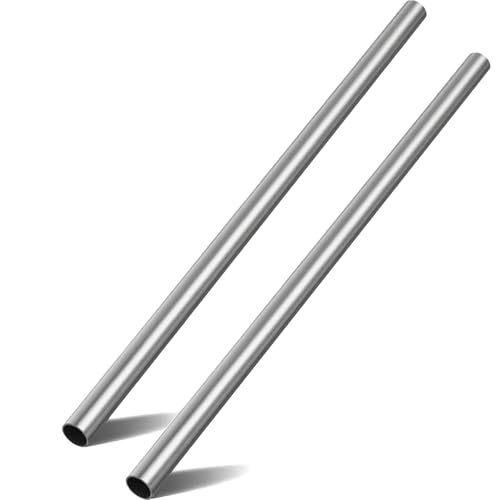
This option provides two 1-inch OD stainless steel tubes, each 20 inches long, crafted from 304 stainless steel for general corrosion resistance. Wall thickness is 1.5 mm (3/50 inch). It is suitable for various installation tasks where standard-sized pipes are needed in compact spaces. While 304 is not as corrosion-resistant as 316 or duplex grades, it remains a reliable choice for non-extreme environments or as a transition component in assemblies involving 2205 duplex stainless steel, so long as the system design accounts for potential galvanic effects and compatibility with other metals.
Hicarer 2 Pcs 1″ OD 304 Tubing

These two 1-inch OD tubes are made from 304 stainless steel with a length of 24 inches. The set emphasizes smooth, polished surfaces and a weldable composition, making them suitable for fabrication and DIY projects where ease of welding and consistent surface finish are important. For duplex-related applications, pairing 304 components with duplex materials requires attention to dissimilar metal compatibility and proper isolation to avoid accelerated corrosion in mixed-metal assemblies.
2″ OD X 0.12″ Wall Stainless Steel Tubing

This 304 stainless steel tubing offers a robust 2-inch outer diameter with a 0.12-inch wall thickness, suitable for welded fabrications and applications requiring a balance of strength and weight. Welded construction provides predictable joining characteristics, which is helpful in modular assemblies or pipe runs. When used alongside 2205 duplex steel components, engineers should consider thermal expansion and galvanic compatibility to preserve durability and corrosion resistance across the system.
GEPPHILL 304 Stainless Coil Tubing

This coil tubing from GEPPHILL is 304 stainless steel, offered as a 25-foot continuous coil with a 1/2-inch outer diameter and 0.60 mm wall thickness. The flexible coil design is ideal for custom bending, small-diameter routing, and applications in food-grade processing or industrial fluid transfer. While 304 stainless steel does not match the corrosion resistance of duplex 2205, its coil form provides excellent flexibility for layout adjustments before finalizing permanent installations. Consider post-fabrication finishing and proper insulation for temperature-sensitive runs.
Buying Guide: Key Considerations For Choosing Tubing For 2205 Duplex Projects
- Material compatibility: Duplex 2205 benefits from pairing with corrosion-resistant steels, but dissimilar metal contact can cause galvanic corrosion. Use compatible fasteners, isolators, or coatings, and avoid mixing with highly galvanic materials where possible.
- Wall thickness and diameter: Thicker walls (like 16 gauge in some 316 tubes) improve mechanical strength and pressure resistance, but add weight and fabrication challenges. Match outer diameter with fittings and sleeves designed for the same standard.
- Length tolerances and straightness: Tolerances (such as ±1/8 inch) affect cut lengths and assembly alignment. Plan for precise measurement during fabrication and consider extra material for field adjustments.
- Welding and fabrication: Weldability is a factor with 304 and 316 stainless tubes. Ensure proper filler material and welding techniques to avoid sensitization or corrosion at welds. Shielding and cleanliness matter for food-grade or high-purity lines.
- Coil vs. straight tubing: Coiled tubing offers flexibility and reduced joints, but requires bending radii considerations. Straight lengths are easier to spec for rigid frame systems or fixed assemblies.
- Temperature and chemical exposure: 304 and 316 grades perform well in many environments, but duplex 2205 excels in higher chloride and thermal cycling conditions. Assess service temperature, chemical exposure, and cleaning regimes.
- Fittings and connectors: Ensure the chosen tubing matches the intended fittings (compression, flare, welded, or clamped). Compatibility reduces leak risk and simplifies maintenance.
- Certification and standards: Look for tubes meeting ASTM standards (such as A269 or A554) for quality, consistency, and reliability in critical applications.
These considerations help ensure the selected tubing integrates smoothly into a 2205 duplex stainless steel system, balancing performance, manufacturability, and long-term durability. Always verify specific project requirements with a material engineer or supplier to confirm compatibility for your particular environment.